
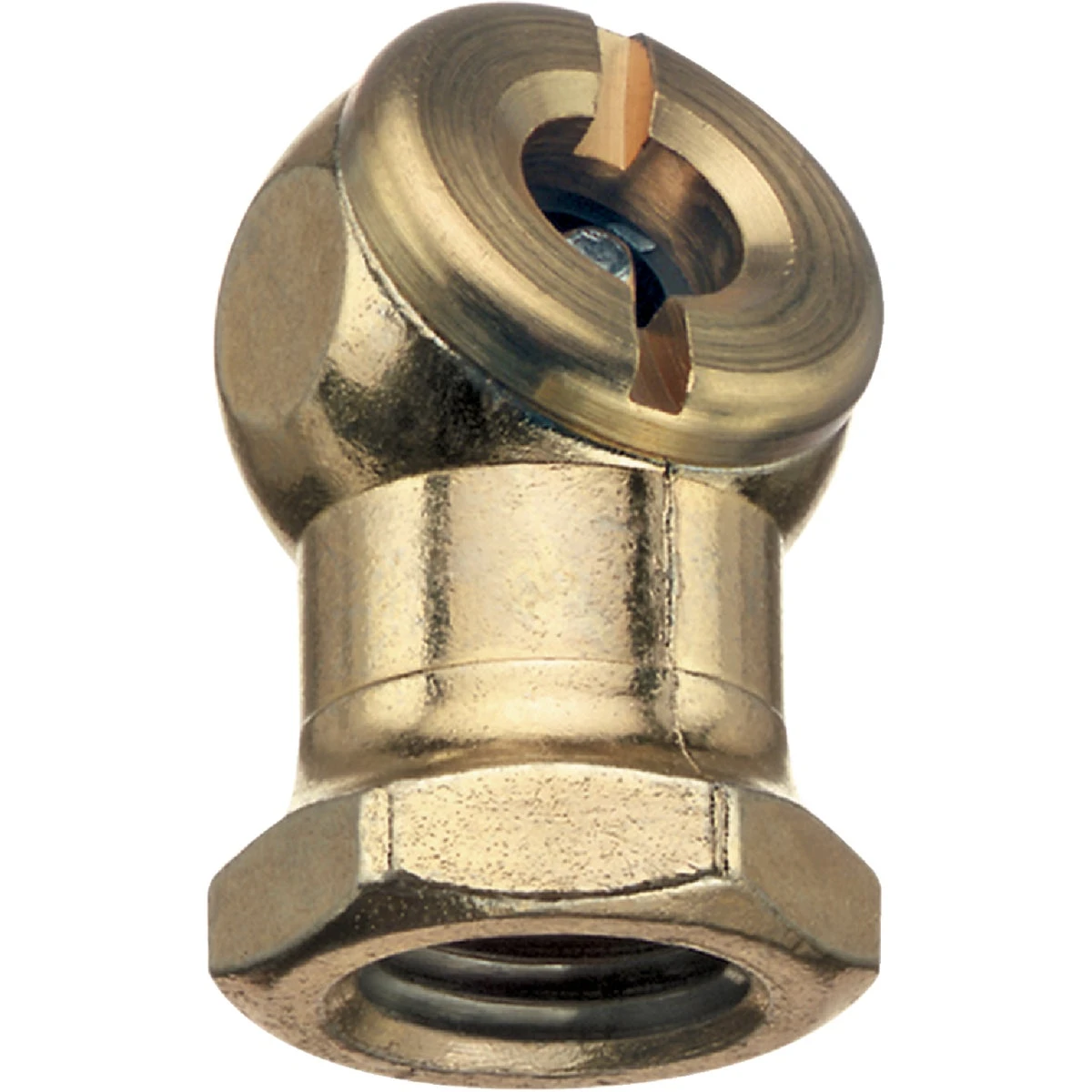
17-351 Air Chuck, 1/4 In. FNPT, 150 PSI, Ball Foot With Shut-Off Valve
SKU #EJ13014 Model #17351 UPC #028893173519
Regular Price
$ 4.59
Bantly Hardware Johnstown, PA
Product can only be purchased in store
Will you be going in-store to purchase this product?
Description

Descriptions are AI-generated. For accurate measurements, please call the store to confirm.
The Tru-Flate 17-351 is a direct air line chuck designed for use on air supply lines that come straight from your compressor. With a built-in shut-off valve and ball foot design, it delivers convenient hands-free operation and reliable pressure control for pneumatic tool applications.
This air chuck solves the problem of managing air flow without needing a separate valve in the line. It is rated for pressures up to 150 PSI and uses a standard 1/4 inch female NPT connection, making it compatible with most air supply setups.
Features and Benefits
- Ball Foot Design: Supports hands-free operation when set on the ground, enabling convenient use in a wide range of air tool applications.
- Built-in Shut-Off Valve: Allows convenient control of air flow directly at the chuck, eliminating the need for an additional valve in the line.
- 150 PSI Rating: Engineered to safely handle pressures up to 150 PSI for reliable performance across a range of air tool applications.
- Standard 1/4" FNPT Connection: Female NPT thread size ensures interchangeability with existing air compressor hoses and tools.
- Durable Construction: Built to withstand the demands of both professional and DIY air tool work.
Specifications
- Brand: Tru-Flate
- Model: 17-351
- Port Size: 1/4 inch FNPT (Female NPT)
- Maximum Pressure: 150 PSI
- Features: Ball foot design, built-in shut-off valve
Safety
- Do Not Use on Inflator Gauges: This direct air line chuck cannot be used on tire inflator gauges or any application where another valve already exists in the line.